
History
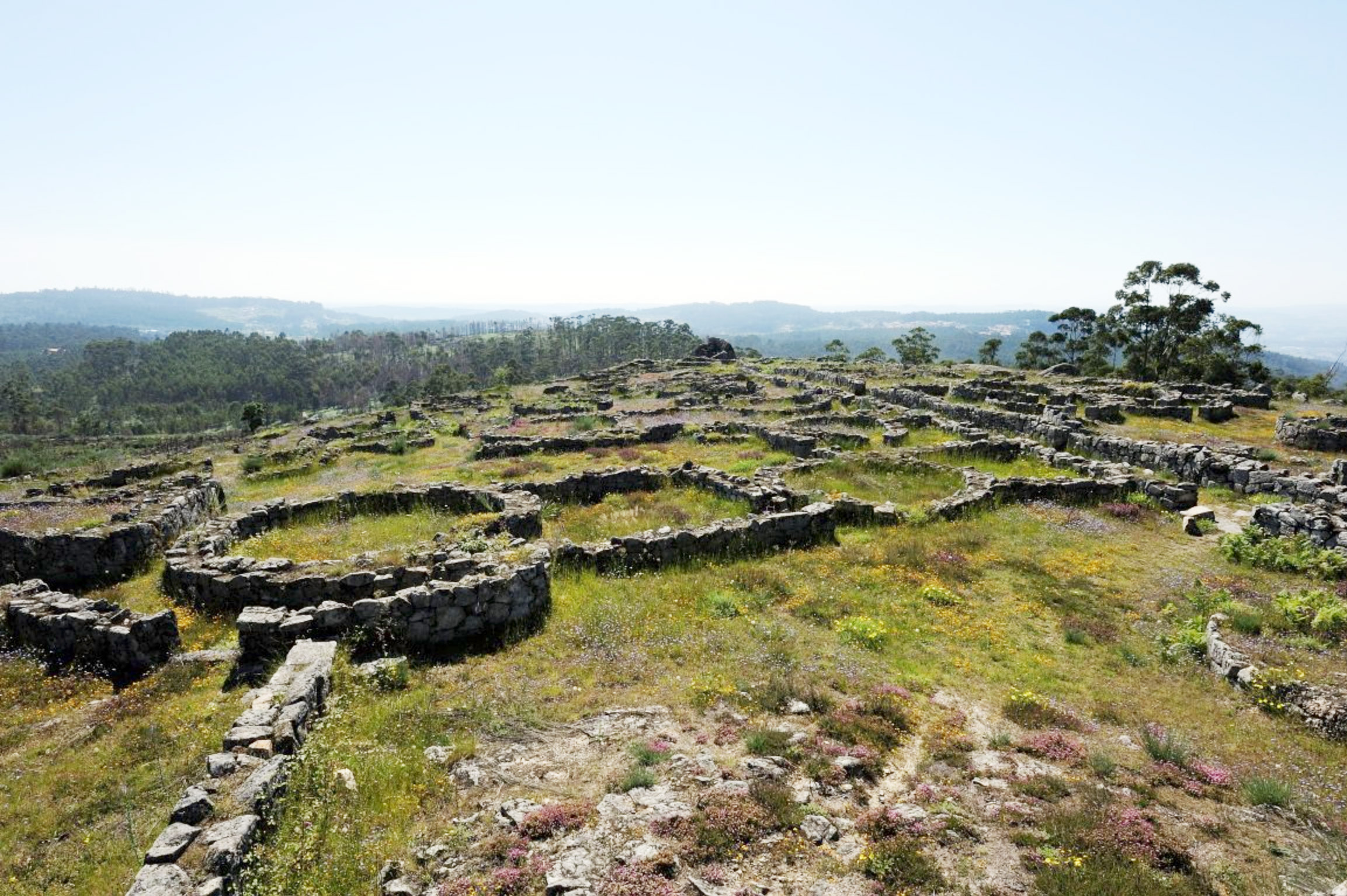
Created around the 1st century BC, this city occupies an area of around 15 hectares, located on a hill surrounded by mountains with granite outcrops, in a strategic location between the Douro and Minho regions.
There is evidence of occupation of Citânia since the 5th century BC, although the main city developed during the Calaic period, between the 2nd and 1st centuries BC.
It is estimated that at that time, around three thousand people lived in the city, dedicating themselves mainly to working with iron and with a strong warrior inclination. Other economic activities, such as agriculture, were carried out by hillforts in the surrounding areas that depended on the city.
This city was the administrative center of a larger region, which included present-day Valongo, Maia and Penafiel, concentrating political and military power. The Romans arrived at the site a few years before the birth of Christ, but found it difficult to do so.
The first studies on Citânia were conducted by historians Francisco Martins Sarmento and Leite de Vasconcelos. Excavations began in 1944 and continued for over fifty years.
Patrimony
Walls
Citânia was protected by several lines of walls, which adapted remarkably to the terrain. The defensive walls had a regular layout with orthogonal streets.
Formosa Stone
The building intended for public baths stands out in the Citânia archaeological complex for its refined technique and for having the famous “Pedra Formosa da Citânia de Sanfins”.
Baths
There are reports that some people on the banks of the Douro River lived in a similar way to the Lacedaemonians (from Sparta). They anointed themselves with oil twice a day in specific locations, took steam baths with stones heated by the fire, and then bathed in cold water. According to Armando Coelho, the waters of these baths are the highest source of the Ferreira River.
Family Nucleus
Citânia has more than one hundred and fifty circular and rectangular buildings, grouped into around forty sets of family units. Recently, one of these family centers was restored.